
AI built for IT service management, infrastructure, and SLA execution
IT service management depends on incidents, changes, service requests, and infrastructure operations governed by strict SLAs. As volumes grow across tools and teams, maintaining consistent execution becomes harder at scale.
DTskill embeds AI directly into ITSM and infrastructure workflows, supporting prioritization, routing, and resolution where work happens. By operating inside platforms like ServiceNow, AI helps teams scale service delivery without losing control or SLA accountability.
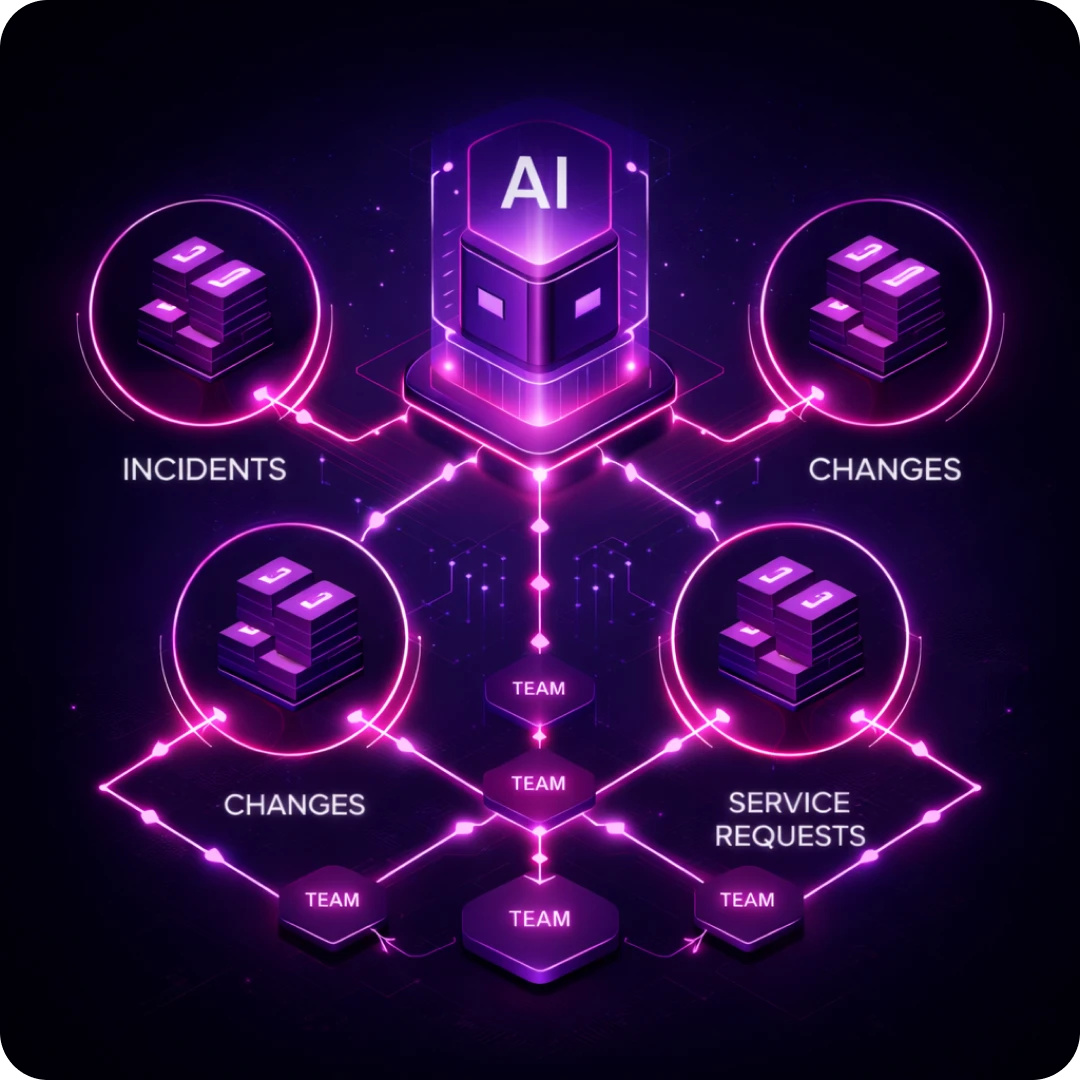
Classifies incidents using service context, CI relationships, and business impact, not just keywords.
Identifies tickets likely to breach SLAs early and triggers corrective actions before escalation.
Transforms unstructured requests into standardized, execution-ready service records automatically.
Assesses proposed changes against past incidents, outages, and rollback data to flag hidden risks.
Links recurring incidents across services to surface underlying problems faster.
Interprets high-volume infra logs to isolate actionable signals and reduce alert fatigue.
Routes incidents, changes, and requests dynamically based on team capacity and urgency.
Continuously converts past tickets and fixes into reusable, searchable operational knowledge.
Get answers to the most common questions with DTskill
DTskill embeds AI directly into existing ITSM workflows without replacing or reconfiguring platforms. Incidents, changes, and service requests continue to flow through the same systems, with AI supporting execution inside them.
Yes. AI continuously monitors workload, priority, and SLA risk in real time. This allows early intervention, dynamic routing, and execution support before SLA breaches occur.
DTskill connects incident workflows with infrastructure signals such as logs, alerts, and CI relationships. This helps operations teams correlate issues, suppress noise, and act on root causes faster.
No. AI operates within existing processes and tools, minimizing change management. Teams continue working in familiar interfaces while execution decisions are supported contextually in the background.
All AI actions operate under governed workflows with visibility and oversight. As usage scales, execution remains predictable, auditable, and aligned with enterprise IT policies.
Embed intelligence into ITSM and infrastructure processes without platform disruption.